

English Department
Go English!
Here at the ECU Department of English, we are a vibrant and energetic collection of teachers, scholars, researchers, and writers. Our department offers four degrees: a B.A. in English; a B.S. in Professional Writing and Information Design; an M.A. in English; a Ph.D. in Rhetoric, Writing, and Professional Communication as well as various minors and certificates. The diversity of this department is one of its strengths: you can take coursework in literature, creative writing, technical and professional communication, rhetoric and composition, multicultural and transnational literatures, linguistics, theory and criticism, folklore, children’s literature, teaching English to speakers of other languages, and film studies. In addition, you can expect to benefit from a breadth of faculty expertise across many areas of study. Above all, your success as a student is our first priority.
English News
 Dr. Ken Parille has an essay in The Comics Journal titled “Chris Ware’s ‘Playdate’ and Visual Allegory.”
In the article, Parille argues, “Reading Ware’s art through the lens of ‘visual allegory’ ignores what makes the drawing attractive, interesting, even strange. With dozens of carefully arranged objects, thematic color patterns, related geometrical shapes, and other unusual design choices, the cover resists (as much as that is possible) a viewer’s desire to make an easy or definitive conversion from image to meaning.”
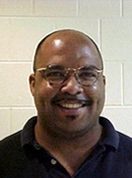
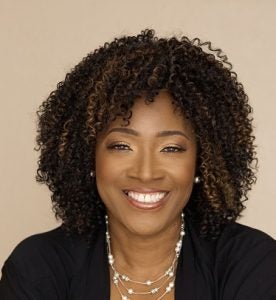 Celestine Davis and Gera Miles represented the English Department through their “Write Time, Write Place” initiative as part of an exciting summer program called MACS (Mathematics, Aerospace, Computers, and Sports). This innovative program combined physical activity with STEM education and creative expression.
Over the week, students began by learning and practicing tennis. They then explored STEM principles connected to their athletic experiences through engaging sessions led by engineers. Afterward, Davis and Miles guided them in writing and storyboarding their educational and personal experiences, which they transformed into digital comics. They emphasized the power of storytelling and showed them how comics could be used to teach their peers about the STEM concepts they had learned.
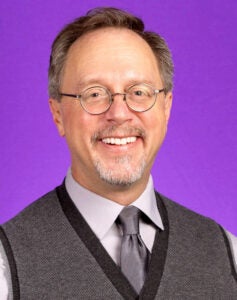 Dr. Mark Johnson has just published a co-edited volume with Mahmoud Abdi Tabari, Cognitive Task Complexity and Second Language Performance: Understanding L2 Learner Affect and Engagement. The volume provides an overview of research focusing on the effects of cognitive task complexity on second language (L2) performance, bringing together renowned scholars in the field. Each scholar presents data-driven insights into the relationships between cognitive task complexity and second language performance by drawing on empirical studies and theoretical analyses.
 Dr. Helena Feder was awarded an ACLS Sustaining Community Connections Grant to continue her work with the North Carolina Museum of Art as Editor of Tar River Poetry. The project focuses on the study and practice of poetry, interarts, and audience building. Helena has been awarded $2000 as the PI, $2000 for her PhD intern at UNC Chapel Hill, and TRP has been awarded $8,000 through the NCMA.
Feder also had an essay published this week in the North American Review.
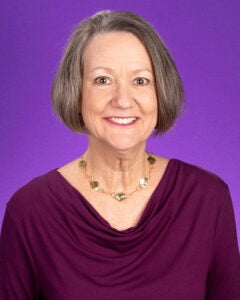 Dr. Margaret Bauer has two new flash prose pieces, “One of those dreams” and “Elegy on a Post-it Note” out in Abstract Magazine.
Abstract is a Pushcart Prize-winning fine arts journal featuring a broad range of artistic works curated from an international group of exciting and innovative creative talent. Abstract seeks fine art in all forms that engages with both the crises and joys of the shared human condition.
 Dr. Marianne Montgomery has just published a chapter, “Using Power for Illumination: Advancement Paths for Non-Tenure-Track Faculty,” in Strategic Shakespeare: Transformative Leadership for the Future of Higher Education, edited by Ariane M. Balizet, Natalie K. Eschenbaum, and Marcela Kostihová.
Strategic Shakespeare demonstrates the value of humanities-trained scholars as leaders in higher education. It features contributions from Renaissance and Shakespearean scholars in leadership roles in North American higher education, who collectively aim to leverage traditional assumptions about Shakespeare in the service of a more inclusive and sustainable academy.
 Dr. Brian Glover has just published an article titled “The Boswell Club of Chicago, 1942-1973” in The Age of Johnson: A Scholarly Annual, volume 25.
The Boswell Club of Chicago, which flourished between 1942 and 1973, was a decidedly non-scholarly men’s club dedicated to both social and literary pursuits. Its eccentric founder, Rousseau Van Voorhies, imagined an imitation in Chicago of both the real eighteenth-century social life depicted in James Boswell’s writings and the imaginary Academy that Boswell and Johnson dream up for St. Andrews in Boswell’s Journal of a Tour of the Hebrides. This article argues that the club’s social vision put the eighteenth century in service of mid-twentieth-century anxieties about bureaucratized capitalism, communications technologies, and corporate masculinity.